
Health Conditions
Medical research now shows many common long-term health problems often share similar lifestyle causes.
-
“Eat from the good things We (ALLAH) have provided for you. And give thanks to Allah”.
Quran - Sura Al- Baqarah 2:172).
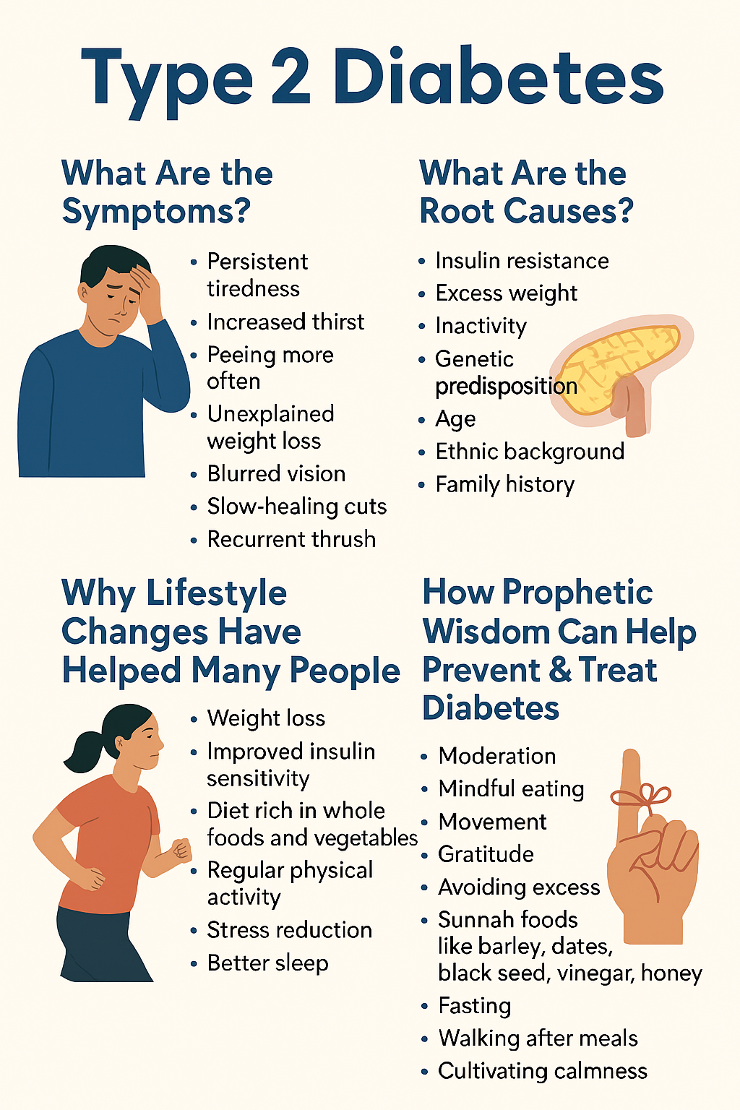
What Are the Symptoms?
Common symptoms of type 2 diabetes include persistent tiredness, increased thirst, and peeing more often than usual. Many people also experience unexplained weight loss, blurred vision, slow‑healing cuts, or recurrent thrush. These symptoms often develop gradually, and some individuals may have no symptoms at all, making early checks important for those at higher risk.
What Are the Root Causes?
Type 2 diabetes develops when the body becomes resistant to insulin or cannot produce enough of it. Excess weight, inactivity, and genetic predisposition all increase risk. Age, ethnic background, and family history also play a role. Over time, high blood glucose levels rise because cells stop responding effectively to insulin, leading to long‑term complications if not addressed.
Why Lifestyle Changes Have Helped Many People
Lifestyle changes are powerful because they target the core drivers of insulin resistance. Weight loss, even modest amounts, can significantly improve how the body uses insulin and may even lead to remission for some people. A diet rich in whole foods, fibre, lean proteins, and vegetables helps stabilise blood glucose and reduce inflammation. Regular physical activity increases insulin sensitivity and supports sustainable weight management. Stress reduction and better sleep also improve hormonal balance. Together, these changes help many people reduce medication needs and regain long‑term metabolic health.
How Prophetic Wisdom Can Help Prevent & Treat Diabetes
Prophetic guidance emphasises moderation, mindful eating, movement, gratitude, and avoiding excess — principles that align closely with modern diabetes prevention. Sunnah foods such as barley, dates in moderation, black seed, vinegar, and honey (used wisely) support digestive balance and metabolic health. Practices like fasting, walking after meals, and cultivating calmness reduce stress and improve insulin response. This holistic approach nurtures body, mind, and spirit, empowering individuals to prevent or better manage diabetes.
Further sources of information
-
Understanding the condition • Root causes • Lifestyle remedies • Prophetic guidance • Prevention • Further resources
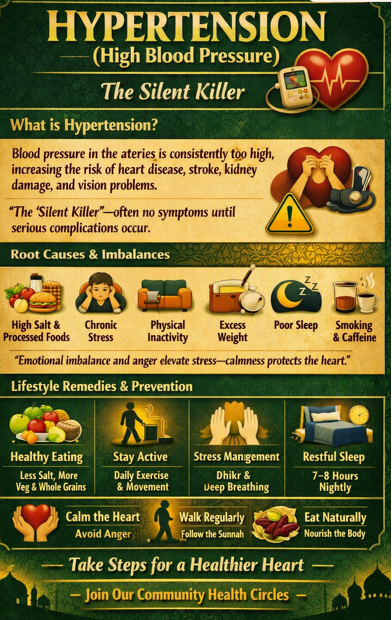
What Is Hypertension?
Hypertension is a condition where blood pressure in the arteries is consistently too high. Over time, this increases the risk of heart disease, stroke, kidney disease, and vision problems. It is often called the “silent killer” because many people have no symptoms until complications occur.
High blood pressure is strongly influenced by lifestyle factors such as diet, stress, sleep, weight, and physical activity.
Root Causes & Imbalances
Hypertension develops due to:
High salt intake and processed foods.
Chronic stress and emotional strain.
Physical inactivity.
Excess body weight, especially around the waist.
Poor sleep quality.
Genetic predisposition, particularly in South Asian communities.
Smoking and high caffeine intake.
From a Prophetic perspective, emotional imbalance, anger, and lack of calmness contribute to physiological stress responses that elevate blood pressure.
Lifestyle Remedies & Prevention
Nutrition
Reduce salt and processed foods.
Increase vegetables, fruits, whole grains, and potassium‑rich foods.
Limit caffeine and sugary drinks.
Practise mindful eating and avoid excess.
Movement
30 minutes of daily walking.
Strength training 2–3 times weekly.
Movement after meals improves blood pressure regulation.
Stress & Emotional Regulation
Dhikr, deep breathing, and slowing down the pace of the day.
The Prophet ﷺ taught calmness and avoiding anger — both reduce blood pressure spikes.
Sleep
Aim for 7–8 hours of restful sleep.
Reduce screens before bed.
Create a calming evening routine.
Weight Management
Reducing waist circumference significantly lowers blood pressure risk.
How Prophetic Wisdom Can Help Prevent & Treat Diabetes
Calmness and emotional regulation: Anger elevates blood pressure; the Prophet ﷺ taught practical steps to calm the heart.
Walking and movement: Regular movement is deeply embedded in Prophetic lifestyle.
Natural foods: Dates, barley, vinegar, olive oil, and whole foods support cardiovascular health.
Moderation: Avoiding excess in food, drink, and emotional reactions protects the heart.
Further Sources of Information
NHS: High blood pressure (Hypertension)
British Heart Foundation: Understanding blood pressure
NICE Guidelines: Hypertension management
-
“When My servants ask you ˹O Prophet˺ about Me: I am truly near.”
Quran - (Sura Al-Baqarah 2:186)Understanding the condition • Root causes • Lifestyle remedies • Prophetic guidance • Prevention • Further resources
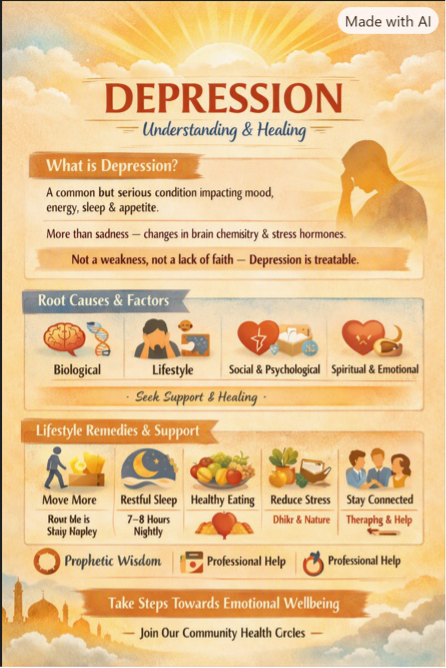
What Is Depression?
Depression is a common but serious mental‑health condition that affects mood, energy, motivation, sleep, appetite, and the ability to enjoy daily life. It is more than sadness; it is a medical condition involving changes in brain chemistry, stress hormones, and emotional regulation.
Depression can affect anyone, including people who appear outwardly strong, religious, or successful. In Birmingham’s Muslim community, depression often goes unspoken due to stigma, cultural expectations, and the belief that emotional struggle should be handled privately.
Depression is not a weakness, not a lack of faith, and not a moral failing. It is a treatable condition influenced by biological, psychological, social, and spiritual factors.
Root Causes & Contributing Factors
Depression arises from a combination of:
Biological Factors
Imbalances in neurotransmitters such as serotonin and dopamine
Chronic inflammation
Hormonal changes
Genetic predisposition
Lifestyle Factors
Poor sleep
Sedentary routines
High stress levels
Irregular eating patterns
Social isolation
Psychological & Social Factors
Trauma or adverse childhood experiences
Relationship difficulties
Financial stress
Work pressure
Loneliness
Cultural expectations to “stay strong”
Spiritual & Emotional Factors
From a Prophetic perspective, emotional heaviness, prolonged sadness, and loss of hope can weaken the heart’s resilience. However, Islam recognises human vulnerability and encourages seeking support, connection, and healing.
Lifestyle Remedies & Supportive Strategies
Lifestyle Medicine offers evidence‑based tools that complement clinical care and therapeutic support.
Movement
Regular walking improves mood and reduces inflammation.
Strength training enhances emotional resilience.
Even 10–15 minutes of movement can lift energy.
Sleep
Aim for 7–8 hours of consistent sleep.
Reduce late‑night screen use.
Create a calming bedtime routine.
Nutrition
Increase whole foods, vegetables, omega‑3 fats, and fibre.
Reduce sugar and ultra‑processed foods that worsen inflammation.
Maintain regular meal times.
Stress Regulation
Deep breathing
Mindfulness
Journaling
Spending time in nature
Reducing overstimulation
Social Connection
Regular contact with trusted friends or family
Participation in community activities
Speaking to someone rather than withdrawing
Professional Support
Depression often improves with:
Talking therapies
Cognitive behavioural therapy (CBT)
Counselling
GP support
Medication when appropriate
Seeking help is a sign of strength, not weakness.
Prophetic & Traditional Wisdom
Islamic tradition offers gentle, compassionate guidance that aligns with modern mental‑health science.
Emotional Honesty
The Prophet ﷺ experienced grief, sadness, and emotional hardship. Islam acknowledges human vulnerability.
Connection & Companionship
The Prophet ﷺ encouraged companionship, community, and mutual support — all protective against depression.
Dhikr & Calmness
Remembrance, gratitude, and slowing down the pace of life can support emotional regulation.
Hope & Renewal
Islam emphasises renewal, mercy, and the possibility of change — powerful antidotes to hopelessness.
Moderation
Balance in sleep, food, work, and worship protects mental wellbeing.
Prophetic wisdom does not replace professional care; it complements it.
Further Sources of Information
NHS: Depression overview
Mind UK: Understanding depression
Royal College of Psychiatrists: Depression resources
WHO: Depression fact sheet
-
“And whoever puts their trust in Allah, then He ˹alone˺ is sufficient for them.”
Quran - (Sura At-Talaq 65:3)Understanding the condition • Root causes • Lifestyle remedies • Prophetic guidance • Prevention • Further resources
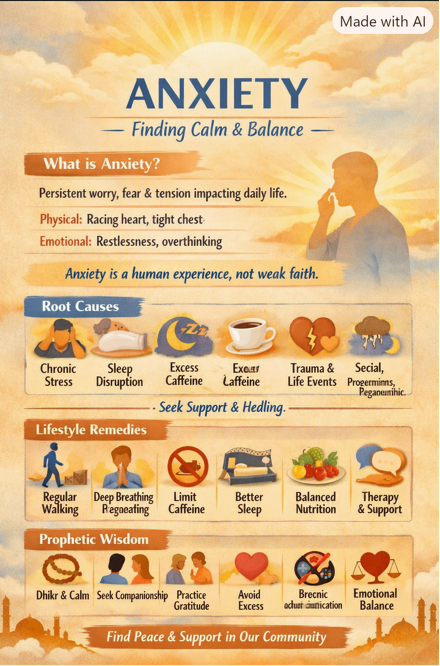
What Is Anxiety?
Anxiety is a common condition involving persistent worry, fear, or tension that affects daily functioning. It can manifest physically (racing heart, tight chest, stomach discomfort) and emotionally (restlessness, overthinking, difficulty concentrating). In Birmingham’s Muslim community, anxiety often arises from work pressure, financial stress, family responsibilities, and social expectations.
Anxiety is not a sign of weak faith or poor character. It is a human experience influenced by biology, lifestyle, and emotional stress.
Root Causes
Chronic stress
Sleep disruption
Excess caffeine
Trauma or difficult life events
Hormonal changes
Social pressure and expectations
Overload of digital stimulation
Isolation or lack of support
Lifestyle Remedies
Regular walking
Deep breathing and grounding exercises
Reducing caffeine
Improving sleep routines
Balanced nutrition
Journaling and structured reflection
Talking therapies or counselling when needed
Prophetic & Traditional Wisdom
Dhikr and slowing down the pace of the day
Seeking companionship and support
Practising gratitude
Avoiding overstimulation and excess
Emphasising calmness and emotional regulation
Further Sources of Information
NHS: Anxiety
Mind UK: Understanding anxiety
Royal College of Psychiatrists: Anxiety disorders
-
… “those who believe and whose hearts find comfort in the remembrance of Allah. Surely in the remembrance of Allah do hearts find comfort.”
Quran - (Sura Ar-Ra'd 13:28)
Understanding the condition • Root causes • Lifestyle remedies • Prophetic guidance • Prevention • Further resources
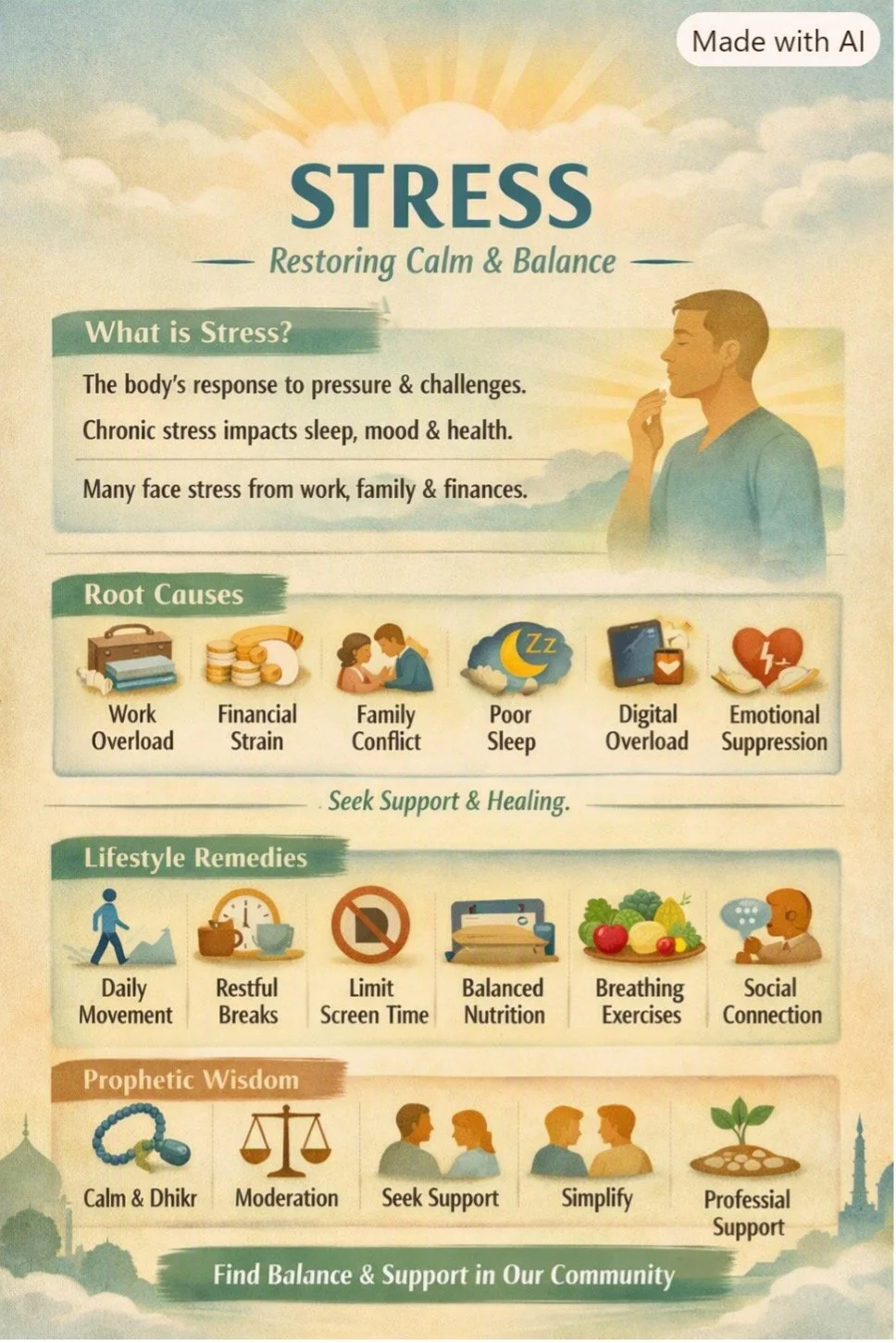
What Is Stress?
Stress is the body’s response to pressure, challenge, or threat. Short‑term stress can be helpful, but chronic stress affects sleep, mood, digestion, blood pressure, and metabolic health. Many Muslims in Birmingham experience stress from work, family responsibilities, financial pressures, and community expectations.
Root Causes
Work overload
Financial strain
Family conflict
Poor sleep
Digital overstimulation
Lack of boundaries
Emotional suppression
Lifestyle Remedies
Daily movement
Structured rest periods
Reducing screen time
Balanced nutrition
Breathing exercises
Social connection
Professional support when needed
Prophetic & Traditional Wisdom
Calmness and emotional regulation
Dhikr and reflection
Moderation in work and rest
Seeking support from trusted companions
Slowing down and simplifying routines
Further Sources of information
NHS: Stress
Mental Health Foundation: Stress resources
-
“Eat and drink, but do not waste.”
Quran - (Sura Al-A'raf 7:31)
Understanding the condition • Root causes • Lifestyle remedies • Prophetic guidance • Prevention • Further resources
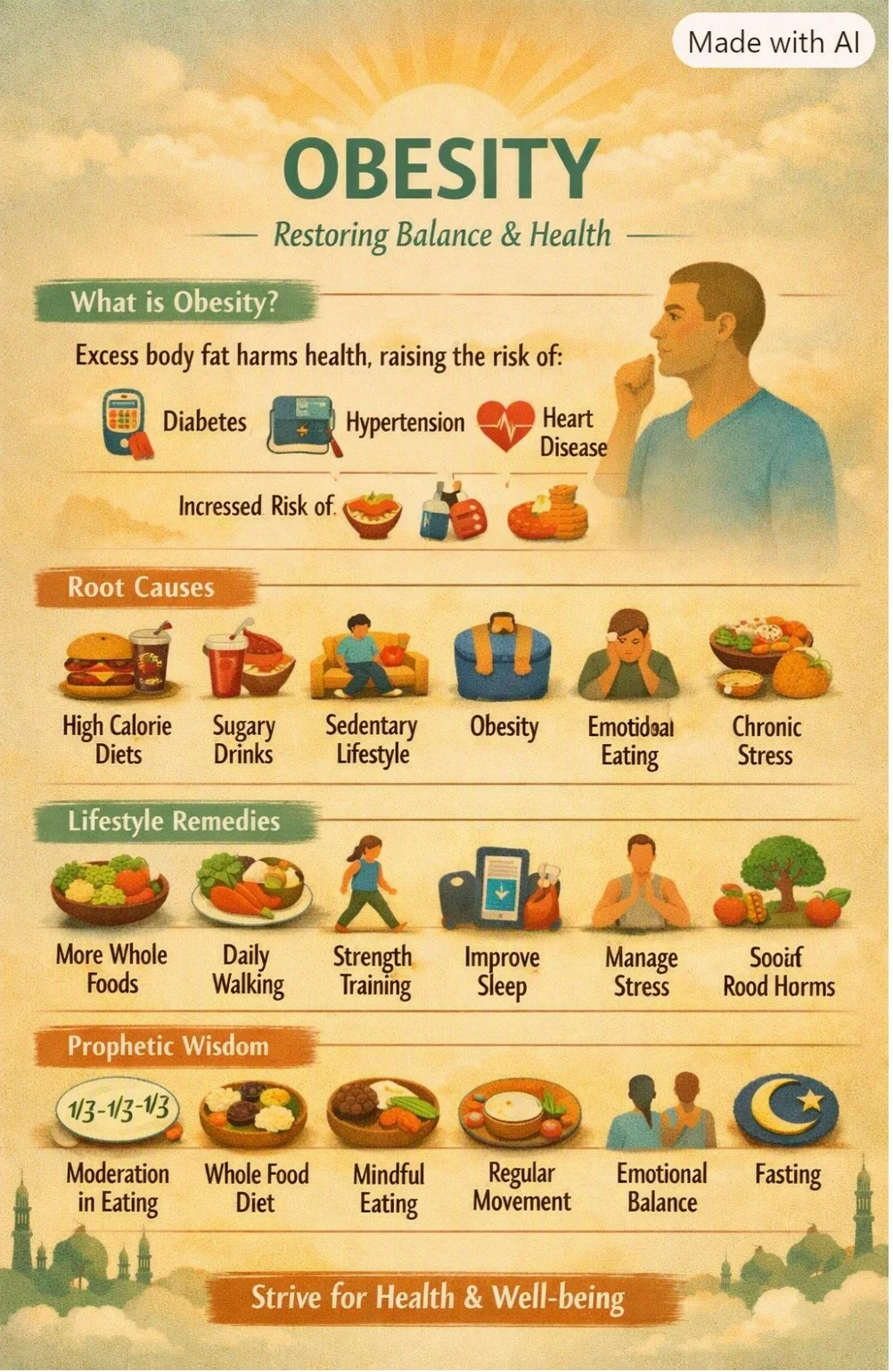
What Is Obesity?
Obesity is a condition where excess body fat affects health, increasing the risk of diabetes, hypertension, heart disease, joint pain, and sleep disorders. It is influenced by biology, lifestyle, environment, and cultural eating patterns.
Root Causes
High‑calorie diets
Sugary drinks
Sedentary routines
Emotional eating
Poor sleep
Chronic stress
Cultural food norms
Genetics
Lifestyle Remedies
Increasing vegetables, fibre, and whole foods
Reducing sugar and processed foods
Daily walking
Strength training
Improving sleep
Stress management
Behaviour‑change coaching
Prophetic & Traditional Wisdom
Moderation in eating
Whole food diet
Mindful eating
Avoiding excess
Regular movement
Emotional balance and calmness
Fasting
Further Sources of information
NHS: Obesity
WHO: Obesity fact sheet
METABOLIC SYNDROME
Understanding the condition • Root causes • Lifestyle remedies • Prophetic guidance • Prevention • Further resources
What Is Metabolic Syndrome?
Metabolic syndrome is a cluster of conditions including high blood pressure, high blood sugar, excess abdominal fat, and abnormal cholesterol. It significantly increases the risk of diabetes, heart disease, and stroke.
Root Causes
Sedentary lifestyle
High sugar intake
Poor sleep
Chronic stress
Excess abdominal fat
Inflammation
Genetics
Lifestyle Remedies
Daily walking
Strength training
Reducing sugar
Increasing fibre
Improving sleep
Stress regulation
Weight management
Prophetic & Traditional Wisdom
Moderation in eating
Regular movement
Emotional balance
Mindful eating
Natural foods
Further Sources
NHS: Metabolic syndrome
CDC: Metabolic health overview
-
“And so We have made you ˹believers˺ an upright community.”
Quran - (Sura Al-Baqarah 2:143)
Understanding the condition • Root causes • Lifestyle remedies • Prophetic guidance • Prevention • Further resources
What Is Metabolic Syndrome?
Metabolic syndrome is a cluster of conditions including high blood pressure, high blood sugar, excess abdominal fat, and abnormal cholesterol. It significantly increases the risk of diabetes, heart disease, and stroke.
Root Causes
Sedentary lifestyle
High sugar intake
Poor sleep
Chronic stress
Excess abdominal fat
Inflammation
Genetics
Lifestyle Remedies
Daily walking
Strength training
Reducing sugar
Increasing fibre
Improving sleep
Stress regulation
Weight management
Prophetic & Traditional Wisdom
Moderation in eating
Regular movement
Emotional balance
Mindful eating
Natural foods
Further Sources
NHS: Metabolic syndrome
CDC: Metabolic health overview
-
"No fatigue, illness, sorrow, sadness, hurt, or distress befalls a Muslim, not even the prick of a bull, except that Allah expiates some of his sins because of it."
Hadith- Sahih Bukhari & Sahih Muslim.
Understanding the condition • Root causes • Lifestyle remedies • Prophetic guidance • Prevention • Further resources
What Is Chronic Pain?
Chronic pain is persistent pain lasting more than three months. It can affect joints, muscles, nerves, or specific body regions. Pain affects mood, sleep, mobility, and quality of life.
Root Causes
Injury
Arthritis
Nerve damage
Inflammation
Stress
Poor sleep
Sedentary lifestyle
Lifestyle Remedies
Gentle movement
Stretching
Anti‑inflammatory nutrition
Improving sleep
Stress reduction
Weight management
Professional physiotherapy or medical support
Prophetic & Traditional Wisdom
Encouragement of movement
Emotional regulation
Use of natural anti‑inflammatory foods
Seeking treatment and support
Further Sources
NHS: Chronic pain
Versus Arthritis: Pain management
-
"Truly, in the body there is a piece of flesh; if it is sound, the whole body is sound, and if it is corrupt, the whole body is corrupt. Truly, it is the heart."
Hadith - Sahih Bukhari & Sahih Muslim
Understanding the condition • Root causes • Lifestyle remedies • Prophetic guidance • Prevention • Further resources
What Is Heart Disease?
Heart disease includes conditions affecting the heart and blood vessels, such as coronary artery disease, angina, and heart failure. It is a leading cause of illness in South Asian communities.
Root Causes
High blood pressure
High cholesterol
Smoking
Poor diet
Sedentary lifestyle
Stress
Diabetes
Genetics
Lifestyle Remedies
Increasing vegetables and fibre
Reducing salt and sugar
Daily walking
Strength training
Improving sleep
Stress regulation
Weight management
Prophetic & Traditional Wisdom
Moderation in eating
Emotional regulation
Natural foods such as dates, barley, vinegar, and olive oil
Regular movement
Seeking treatment and support
Further Sources
NHS: Heart disease
British Heart Foundation: Heart health
This section examines each condition’s root causes and imbalances, and how simple daily habits can restore balance.
We combine lifestyle medicine with Prophetic wisdom. Here you’ll find practical guidance and thoughtful insights on;
Symptoms
Root causes
Lifestyle advice
Prophetic guidance supporting healthy habits
Case studies of health improvements
Imbalance in body, mind, or soul brings problems. Finding balance is challenging; traditional and Prophetic wisdom help because spiritual teachers live holistically, align inner and outer knowledge, and provide practical role models.